 Southend Electrical Services
Guide
How Long an EICR Takes and What Is Involved
A typical EICR on a three-bedroom house takes a few hours. Here is what the electrician checks, what affects the time and what you get at the end.
- Send a short enquiry
- Covering Essex
- EICR and related services
An EICR on a typical three-bedroom house usually takes a few hours, and larger or more complicated properties can take most of a day. The electrician inspects the fixed wiring, tests each circuit and then produces a written report on the condition of the installation. This guide explains each stage so you know what to expect before the work starts.
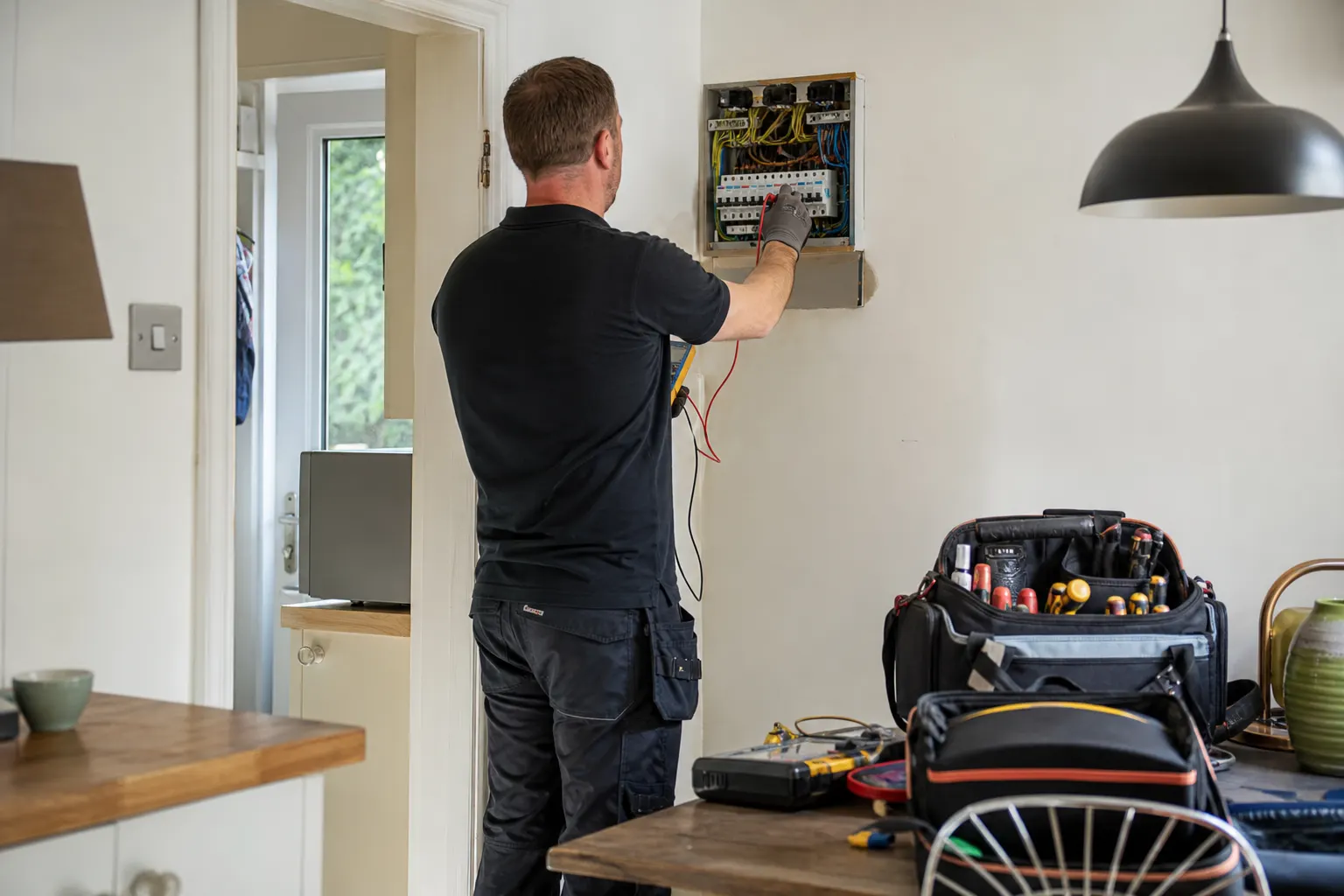
What EICR stands for and what it covers
EICR stands for Electrical Installation Condition Report. It is a formal inspection of the fixed electrical installation in a property: the consumer unit (fuse board), the wiring, sockets, light fittings, switches, earthing and bonding.
It is not the same as PAT testing. PAT testing looks at portable appliances such as kettles and lamps, while an EICR looks at the permanent installation behind the walls. Landlords, homeowners and commercial premises often need both, but they are separate jobs.
What happens during the inspection
The electrician starts with a visual inspection. They look at the consumer unit, check for damaged or overheated fittings, and look for signs of unsafe alterations or missing protection.
Next comes testing. Power has to be switched off to individual circuits so the electrician can test them safely, then switched back on for further checks. This is done circuit by circuit. Each circuit is tested for things like continuity, insulation resistance and how the protective devices respond.
The electrician records every result as they go. Because these checks are done without taking the wiring apart, there is normally little mess, though some fittings may need to be opened to see the connections.
How long it takes and what changes it
For a three-bedroom house, expect a few hours as a typical guide. A small flat can be quicker. A large home, a property with several consumer units or a commercial site can take longer, sometimes spread over more than one visit.
The main things that affect the time are:
The number of circuits and outlets. More sockets, lights and circuits mean more to test.
Access. Locked rooms, loft hatches that are blocked, furniture in front of sockets or a consumer unit hidden behind stored items all slow things down.
The age and condition of the installation. Older wiring, mixed wiring types or unclear labelling take more time to trace and record.
Outbuildings. Garages, sheds, garden power and data or network equipment cabinets add to the inspection.
Preparing for the visit
A little preparation keeps the inspection short. Clear access to the consumer unit and to rooms throughout the property. Let everyone know the power will go off in sections during the day.
Save your work and shut down computers and any data equipment you rely on. Plan around fridge freezers, alarms and anything else that should not lose power for long. If the property is tenanted, landlords should give the tenants notice so the electrician can get into every room.
The report and what happens if it is unsatisfactory
After testing, the electrician issues the report. It lists what was inspected, what was found and an overall result of satisfactory or unsatisfactory. Any issues are given observation codes. Those marked C1 (danger present) or C2 (potentially dangerous), or marked FI (further investigation required), lead to an unsatisfactory result. C3 means improvement is recommended and does not fail the report on its own.
If your report is unsatisfactory, it is not the end of the road. The electrician can explain what needs doing, and the faults should be put right and the installation re-checked. Ask for a written quote for any remedial work so you can see what is included.
On pricing in general, the cost of an EICR is usually shaped by the size of the property, the number of circuits, access, the time the inspection takes and whether any follow-up work is needed. Ask for a written quote that sets out what is covered.
How often an EICR is needed and how long it lasts
The report states a recommended date for the next inspection, set by the electrician based on the condition they found. Homeowners often have one done at longer intervals or when buying or selling, while rented homes are commonly checked every five years or sooner if the report says so. The rules can change, so check GOV.UK for the current position for your type of property.
An EICR reflects the installation on the day it was tested. If you have major electrical work done, or problems appear, it can be worth having it inspected sooner. This guide applies to properties in Southend and across Essex, and the same principles hold for homes, rental properties and commercial premises.
Common questions
How long does an EICR take for a 3-bedroom house?
Typically a few hours. Access, the number of circuits and the condition of the wiring can make it shorter or longer, so treat that as a guide rather than a fixed time.
What does EICR stand for?
Electrical Installation Condition Report. It records the condition of the fixed wiring and related equipment in a property.
What happens if you fail an EICR?
The report is marked unsatisfactory and lists the issues found. Faults need to be put right and the installation re-checked. Ask for a written quote for any remedial work.
How long does an EICR last?
The report gives a recommended date for the next inspection based on the installation's condition. Rented homes are often checked about every five years, but check GOV.UK for the current rules.
Useful sources
- NICEIC: The electrical contracting body, with a register to check an electrician.
- GOV.UK: electrical safety standards in the private rented sector: The official guidance for landlords, tenants and councils on electrical safety checks.