 Southend Electrical Services
Guide
What is an EICR?
An EICR is an Electrical Installation Condition Report: an inspection and test of your fixed wiring that records whether it is safe to keep using.
- Send a short enquiry
- Covering Essex
- EICR and related services
An EICR is an Electrical Installation Condition Report. It is a formal record of an inspection and test of the fixed electrical installation in a property, showing whether it is safe to keep in use and what, if anything, needs fixing. Southend Electrical Services covers Southend and the wider Essex area, and this guide explains what the report involves so you know what to expect.
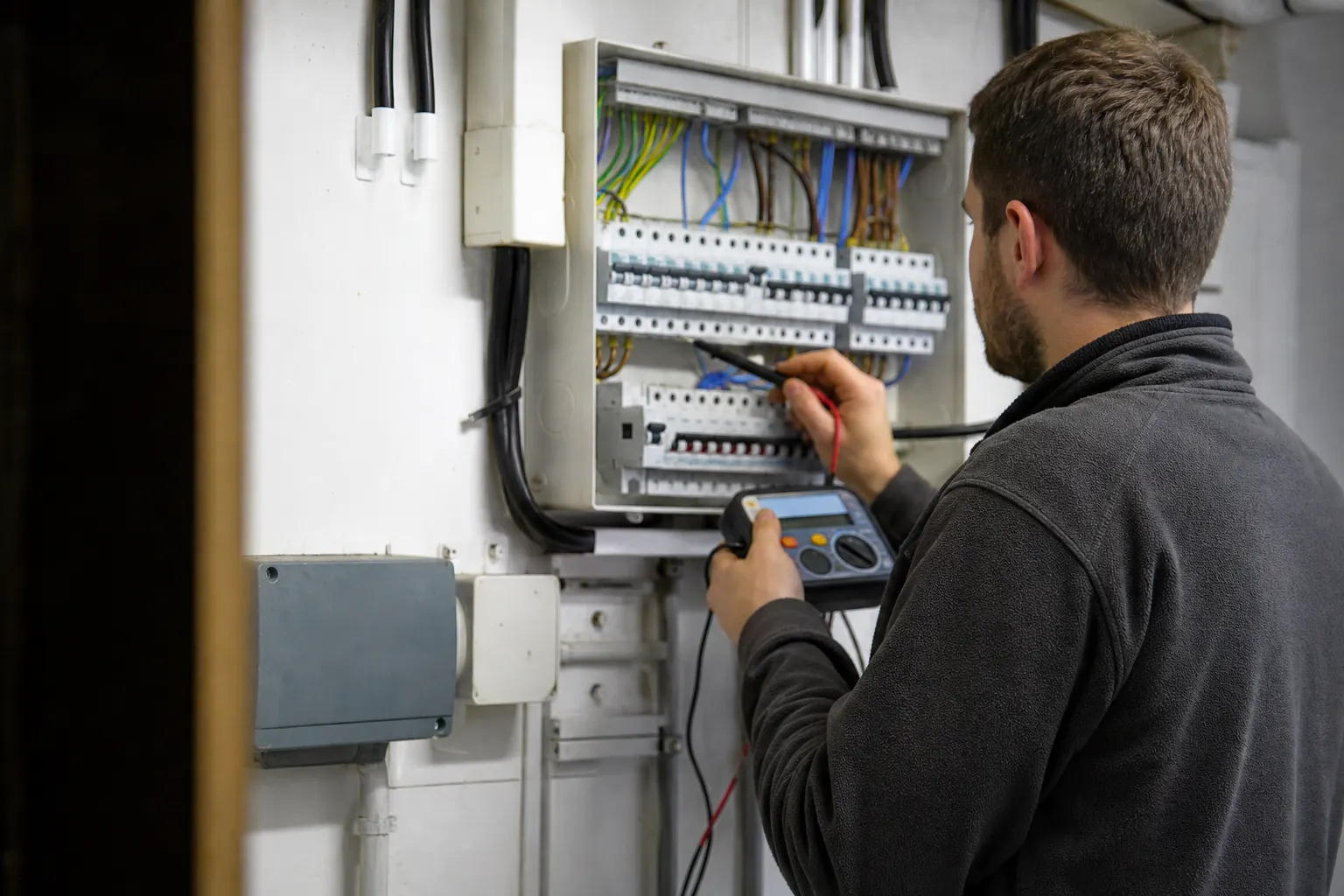
What an EICR actually covers
The report looks at the fixed parts of your electrical installation: the consumer unit (fuse box), circuits, sockets, light fittings, switches, earthing and bonding, and the wiring you cannot see behind walls and ceilings. The electrician uses visual checks and test instruments to find out whether these parts are in a safe condition and meet the relevant standards.
It does not cover portable appliances such as kettles or lamps. That is a separate check called PAT testing. An EICR is about the installation built into the property.
What happens during the inspection
The electrician starts with a visual inspection, looking for damage, overheating, wear, loose fittings and signs of unsafe DIY work. They then carry out tests on each circuit, which usually means the power is switched off for short periods so connections can be checked safely. Plan for that if you work from home or have equipment that needs constant power, such as a freezer or medical device.
The electrician will need access to the consumer unit and to every room with sockets, switches or lights. Lofts, garages, outbuildings and cupboards with wiring in them count too. Clearing furniture away from sockets and the fuse box helps the visit go smoothly.
How to read the result
The report gives an overall result of satisfactory or unsatisfactory. Any problems found are given a code:
C1: danger is present and immediate action is needed.
C2: potentially dangerous and urgent remedial work is needed.
C3: improvement is recommended but it is not considered dangerous.
FI: further investigation is needed because something could not be fully assessed.
A C1, C2 or FI code normally means an unsatisfactory result. A report with only C3 observations can still be satisfactory. The report should also state a recommended date for the next inspection, so keep it somewhere safe.
Who needs an EICR
Landlords are the group most often asked for one. Rules for rented homes require the electrical installation to be inspected and tested by a qualified person at regular intervals, and the report must be given to tenants and, when asked, to the local authority. Because rules can change, check GOV.UK for the current position before you rely on this.
Homeowners are not usually forced to have one, but it is sensible if you have just bought an older property, have never seen a report for your wiring, notice flickering lights, warm sockets or tripping circuits, or are planning major work. Many people also arrange one when the house is going on the market, because a buyer or their solicitor may ask. There is generally no single certificate you must hold to sell a home, but check current guidance on GOV.UK and ask your solicitor.
How long it takes and what affects the cost
The time depends mainly on the size of the property and the number of circuits. A small flat is quicker than a large family house, and a property with outbuildings or an older, more complicated consumer unit takes longer. Poor access, locked rooms or hidden fittings add time. If the report finds faults, the repair work is separate and takes extra time.
Cost works the same way. The price usually reflects the size of the installation, the number of circuits, how easy everything is to reach, and how long the electrician expects to spend. Any repairs, parts or follow-up visits are a separate matter from the inspection itself. The sensible approach is to ask for a written quote that states clearly what is included, and whether remedial work would be quoted separately.
Choosing someone to carry it out
An EICR is only as reliable as the person signing it. Ask any electrician about their qualifications for inspection and testing, whether they belong to a recognised competent person scheme, and whether they can show ID. Make sure the report you receive is detailed, lists the circuits tested and explains any codes in plain language. If something is unclear, ask them to talk it through before you agree to any repair work.
Common questions
What is an EICR certificate?
People often call the report a certificate, but the proper name is an Electrical Installation Condition Report. It records the condition of the fixed wiring, gives a satisfactory or unsatisfactory result and lists any faults found.
How long does an EICR test take?
It varies with the size of the property, the number of circuits and how easy everything is to reach. A small flat is generally quicker than a large house. Ask the electrician for an estimate when you request your quote.
What happens if my EICR is unsatisfactory?
The report will list what needs attention, using the C1, C2 and FI codes. Those faults need to be dealt with, usually by an electrician carrying out the remedial work, and the installation may then need to be rechecked. Landlords should act within the timescale the report or current rules set out.
Can I sell my house without an EICR?
There is generally no rule that a seller must hold one, but buyers, surveyors or solicitors sometimes ask to see one. Check GOV.UK for the current position and speak to your solicitor.
Useful sources
- NICEIC: The electrical contracting body, with a register to check an electrician.
- GOV.UK: electrical safety standards in the private rented sector: The official guidance for landlords, tenants and councils on electrical safety checks.